Mental Health & Recovery Overview
What is Mental Illness?
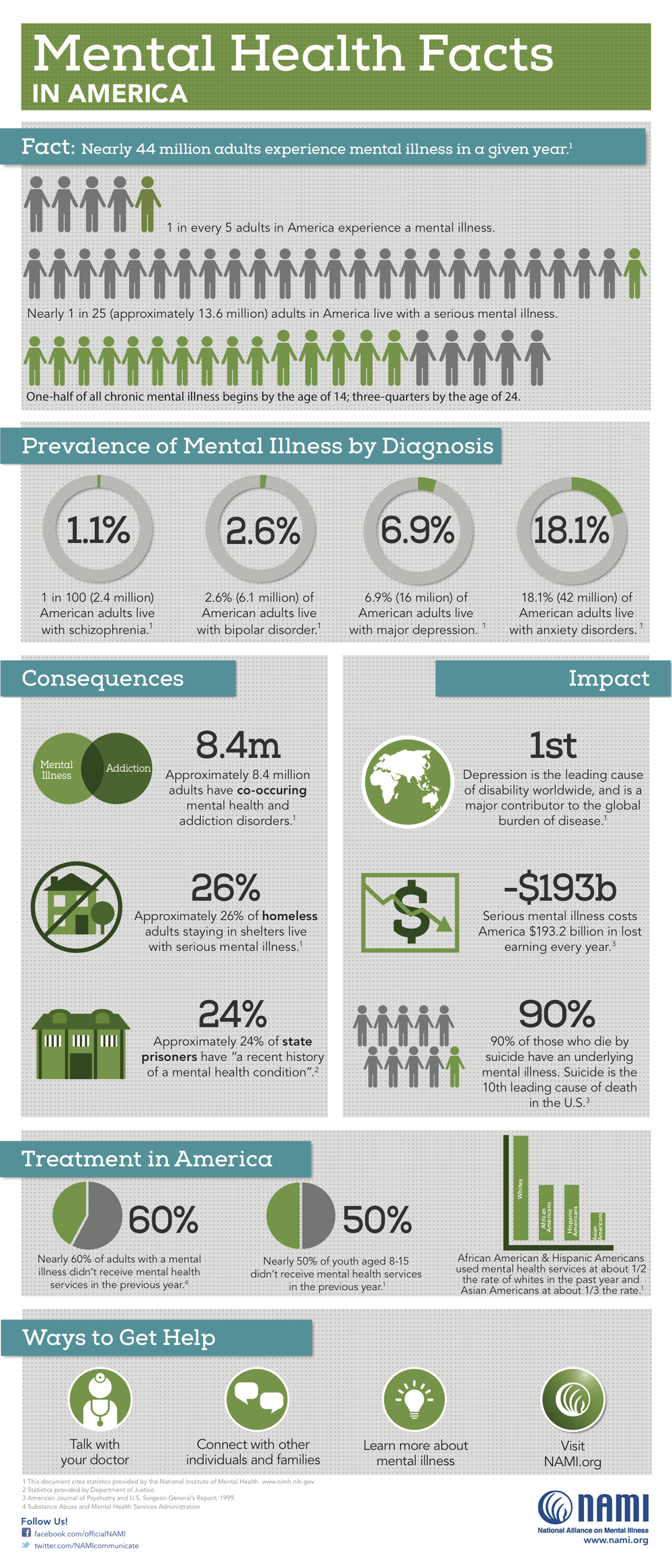
Over the course of your life, if you experience a mental illness, your thinking, mood, and/or behavior could be affected. Mental illnesses are often not the result of one event but a compilation of different factors. In fact, research suggests that there are many factors that could contribute to mental illnesses including: biological and biochemical processes, life stressors, or a family history of mental illness.
Some serious mental illnesses include: major depression, schizophrenia, bipolar disorder, obsessive compulsive disorder (OCD), panic disorder, post-traumatic stress disorder (PTSD) and borderline personality disorder. However, while another individual might have the same diagnosis as you, mental illness manifests differently in every person. The main thing to remember is that you are not alone and that help is always available.
Mental illnesses are medical conditions and should be viewed as such. With the proper care and treatment many individuals learn to cope or recover from a mental illness or emotional disorder. In fact, many people diagnosed with a serious mental illness can experience relief from their symptoms by actively participating in an individual treatment plan.
Mental Health Conditions
Listed below are guides that can help provide you with an overview of specific mental illnesses. For a more extensive list of links that can connect you to state and national resources, visit the NAMI Wisconsin Education Links page.
Anxiety Disorders
Bipolar Disorder
Borderline Personality Disorder
Depression
Dissociative Disorders
Eating Disorders
Early Psychosis & Psychosis
Obsessive Compulsive Disorder (OCD)
Post-traumatic Stress Disorder
Schizoaffective Disorder
Schizophrenia
Recovery and Wellness
Recovery IS possible. While there is no one-size-fits-all path to recovery, the journey to improve your health and wellness is a process. Recovery allows you to integrate your unique needs, desires and own idea about life and wellness. So while what works for one person may not work for another, recovery focuses on what the individual defines for themselves as living a full, meaningful, productive and satisfying life while living with a mental health challenge.
Important to recovery is using tools to make informed decisions now about things that may happen in the future. Two helpful tools to consider are advance directives and a safety plan.
-
Advance Directives support the principle of recovery by ensuring the choices of the individual regarding treatment and services are honored in the event their judgment becomes impaired. A directive can help someone get the care they want at a time when they are not doing well. For more information on how to develop and implement a directive, please see the document below.
-
Safety Plans can help guide you through difficult moments when you or a loved one is having thoughts of harming themselves. In general, a safety plan is designed so that you can follow through with the steps that are outlined until you feel safe. It would be most helpful to have your plan stored in a location that is easily accessible during emotionally trying times.
Provided below are sample safety plans that you can fill out as you see fit.
How to Develop a Suicide Safety Plan | Psychology Today – An easy guide for developing a safety plan with an individual at increased risk for a suicide attempt.
CHILD Short-Term Crisis Intervention Plan- An action plan that can be used when a student may be at risk of harm to self or others. A child’s crisis plan should be developed by individuals knowledgeable about the child and include someone trained in mental health crisis response.
Please call our office or email one of our Certified Peer Support Specialists to learn more about services and resources in Dane County and the Peer Support services we provide.